Review: Mini Small Bear Embroidery for Craft Fairs
As an embroidery designer who has spent countless weekends behind a craft fair table, I have learned that not every design translates into a bestseller. Some designs are technically impressive but visually quiet, while others possess an immediate charm that stops passersby in their tracks. Today, I am reviewing the Mini Small Bear Embroidery design, evaluating it through the lens of a small business owner preparing for a high-traffic handmade market. This piece falls squarely into the popular Baby Animals category, a niche that consistently performs well for handmade product lines targeting parents, gift-givers, and lovers of whimsical decor.
First Impressions and Visual Appeal
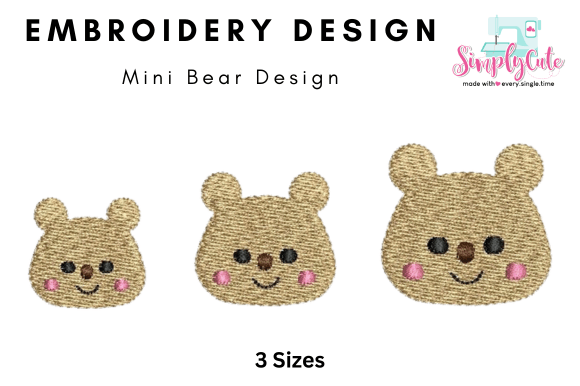
The first thing I look for in a new machine embroidery design is its "glance factor." Can a customer understand what it is from three feet away? The Mini Small Bear Embroidery excels here. It projects a soft, approachable aesthetic that feels both modern and timeless. It is not overly rustic or strictly farmhouse; rather, it strikes a balance that fits seamlessly into contemporary nurseries and casual adult accessories alike. The silhouette is clean, suggesting that it will remain legible even when scaled down for smaller items like patches or pocket accents.
For an Etsy seller or boutique maker, this visual clarity is crucial. In a crowded online marketplace, your thumbnail image must convey the subject instantly. This design’s simplicity ensures that it photographs beautifully, avoiding the visual noise that can plague complex, multi-layered motifs. It feels premium because it is uncluttered, allowing the quality of your thread work and fabric choice to take center stage.
Product Versatility for the Craft Fair Booth
When I plan my inventory for a weekend show, I need designs that are versatile. I do not want a motif that only works on one type of item. The Mini Small Bear Embroidery is a chameleon. Here is how I envision it performing across different craft fair product categories:
- Tote Bags and Market Bags: This is perhaps the strongest application. Placed centrally on a canvas tote or subtly on the corner of a cotton market bag, the bear acts as a charming focal point. It transforms a generic bag into a tote bag design that feels personalized and special.
- Aprons and Kitchen Textiles: For the home goods section of my booth, this design shines on bib aprons. An apron embroidery featuring a cute bear appeals to bakers and cooking enthusiasts. Similarly, on linen or waffle-weave towels, it creates a high-end tea towel embroidery look that suggests quality and attention to detail.
- Embroidered Patches: Because the design is described as "mini," it is ideal for iron-on or sew-on patches. These are excellent impulse buys at craft fairs. Customers love adding a unique embroidered patch to denim jackets or backpacks, and the small scale keeps production costs low while maintaining high perceived value.
- Caps and Headwear: Embroidering on curved surfaces can be tricky, but a simple, bold outline like this bear usually stabilizes well. It adds a playful touch to dad hats or beanies without overwhelming the limited space.
Production Practicality and Batch Efficiency
From a production standpoint, time is money. A design that takes twenty minutes to hoop and stitch is rarely profitable for small accessories. While I do not have the exact stitch count for this specific file, the description of it being a "mini" accent suggests a lower stitch density, which is advantageous. Lower stitch density means faster run times and less thread consumption. This allows me to batch produce items like pouches and pillow covers efficiently before a big market weekend.
Furthermore, the repeatability of the design is high. Since it does not rely on intricate, tiny details that might shift or break during high-speed stitching, it is reliable for commercial use. Consistency is key for a small shop product line; customers expect the bear on one tote to look identical to the bear on another. This design appears robust enough to deliver that consistency.
Technical Considerations and Careful Use
However, no design is without its challenges. As a professional, I must advise caution regarding fabric texture and size. When working with textured towels or thick fabrics like denim, the small details of the bear could get lost if the thread colors do not contrast sufficiently with the background. I recommend testing the design on scrap fabric first. If you are using dark fabric, ensure your thread choice is bright enough to pop, or consider using a lighter underlay if the software allows.
Another critical factor is the hoop size. Since this is a mini design, ensure you are using the smallest hoop appropriate for your machine to maintain registration accuracy. Large hoops can sometimes lead to slight shifting that is more noticeable on small, detailed motifs. Additionally, always use the correct stabilizer. For stretchy fabrics like t-shirts or thin cotton totes, a cut-away stabilizer might be necessary to prevent puckering around the bear’s edges, preserving the crispness of the finished product.
Enhancing Brand Consistency and Buyer Engagement
Incorporating the Mini Small Bear Embroidery into your lineup can strengthen your brand identity if you position it correctly. It signals warmth, care, and whimsy. For buyers browsing your booth or your online store, this emotional connection drives engagement. It is not just a bear; it is a feeling of comfort. This is particularly effective for commercial embroidery businesses targeting the baby and children’s market, but it also has crossover appeal for adults who appreciate nostalgic or cute aesthetics.
To maximize sales, create a cohesive display. Group all items featuring the bear together. Use a printable mockup in your online listings to show the design in context—on a nursery wall, in a kitchen, or on a child’s bag. High-quality design assets and photos help the customer visualize the finished product in their own life, increasing the likelihood of purchase.
Final Designer Notes and Licensing
Before you commit to producing a full inventory, there are administrative steps you must take. First, verify the license terms of the digital embroidery file. Ensure it includes commercial rights so you can legally sell the physical items you create. Second, check the available formats to ensure compatibility with your specific embroidery machine. Finally, review the included sizes. Does the file come in multiple scales? Having options allows you to adapt the bear for a large pillow cover or a tiny sock cuff, expanding your product range without buying new designs.
In conclusion, the Mini Small Bear Embroidery is a strong contender for any maker looking to add charm to their Baby Animals collection. It balances aesthetic appeal with production efficiency, making it a smart choice for both Etsy seller platforms and physical craft fairs. By paying attention to fabric contrast, stabilizer choice, and strategic placement, you can turn this simple digital file into a standout bestseller.